
Coal smoke and risk of dying from esophageal and stomach cancer
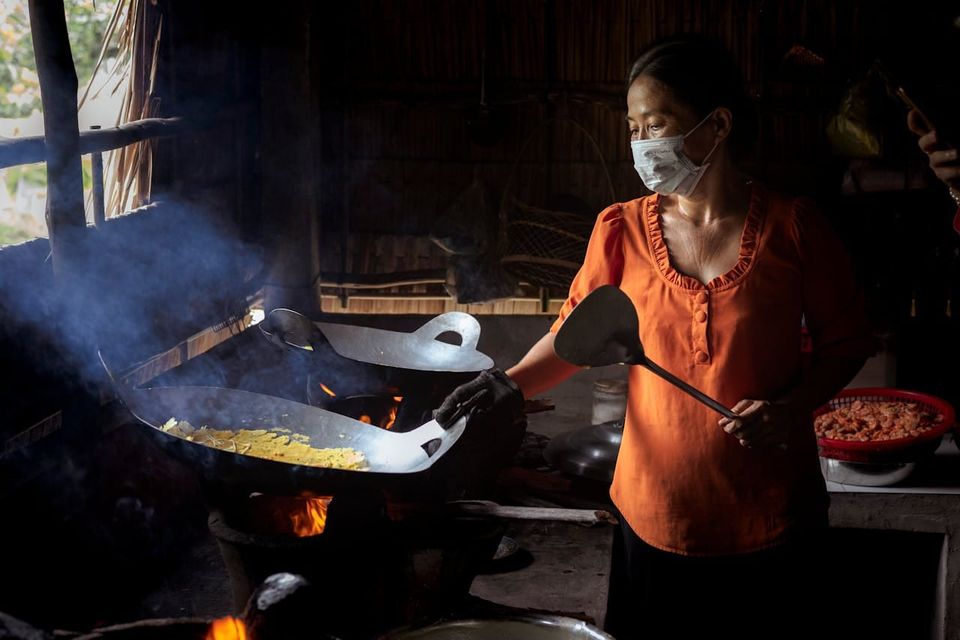
While smoking and alcohol intake are the major causes of esophageal squamous cell carcinomas in most populations, exposure to environmental and occupational agents have been linked to increased risk in a number of settings (Etemadi, et al., JNCI 2024 Mar 7;116(3):379-388. doi: 10.1093/jnci/djad218. PMID: 37856326.) These include asbestos, certain solvents and adhesives, and polycyclic aromatic hydrocarbons (PAHs) generated from burning wood and coal. This large cohort study examines risk of death from esophageal and stomach cancer in Xuanwei, China, where residents burn smoky (bituminous) coal, generating high indoor levels of PAHs. A cohort of 42,420 people in Xuanwei was followed from 1976 to 2011, with researchers modeling lifetime exposures to 43 pollutants — including 37 PAHs, PM2.5, NO₂, SO₂, and black carbon — using Cox regression to estimate cancer mortality risk. The findings revealed significant associations between smoky coal exposure and both cancers. For stomach cancer, lifetime smoky coal use raised mortality risk by 40% (HR = 1.40), and a 37-PAH cluster (PAH37) raised risk by 59% per standard deviation. For esophageal cancer, smoky coal use nearly tripled the risk (HR = 2.84), while PAH37 raised risk by 75% per standard deviation. Notably, the association between PAH exposure and stomach cancer was significantly stronger in women than in men (p=0.02), which the authors attribute to women performing nearly all cooking and spending more time indoors, accumulating far greater lifetime exposure. Although the associations were statistically significant for both cancers, it should be noted that the number of esophageal cancer deaths (n=39) was particularly small. This study substantially bolsters the theory that household air pollution, particularly from burning coal, contributes to increased risk of dying from stomach and esophageal cancer.
Exposure to household air pollution in relation to stomach and esophageal cancer in Xuanwei, China.
Environ Int. 2025 Nov;205:109889. doi: 10.1016/j.envint.2025.109889.
PMID: 41202457.
Blechter B, Portengen L, Downward G, Bassig BA, Hu W, Wong JYY, Rahman ML, Zhang Y, Ning B, Li J, Yang K, Keil A, Hosgood HD, Silverman DT, Rothman N, Huang Y, Vermeulen R, Lan Q.
Abstract
Household air pollution (HAP) is a global health burden affecting about half of the world's population. In Xuanwei, China, individuals experience high concentrations of various HAP constituents, particularly polycyclic aromatic hydrocarbons (PAHs). Here, the association between HAP constituents and cause-specific mortality from stomach and esophageal cancer was investigated. The study was conducted in a cohort of 42,420 subjects from Xuanwei, China. Participants were followed from 1976 to 2011. Type of fuel used was collected through a questionnaire and categorized into lifetime smoky vs. other fuel use. Annual exposures were predicted for 43 HAP constituents and 5 clusters were identified using hierarchical clustering. Cox regression was used to estimate the association between lifetime smoky coal use and pollutant clusters with stomach (n = 143) and esophageal (n = 39) cancer. All models were stratified by sex and birth cohort and adjusted for smoking status and education. Lifetime smoky coal use (hazard ratio [HR] = 1.40, 95 % confidence interval [CI]: 1.00, 1.96) and a large PAH cluster, PAH37 (HR = 1.59, 95 % CI: 1.19, 2.13 per standard deviation [SD]), were associated with stomach cancer mortality. Similarly, lifetime smoky coal use (HR = 2.84, 95 % CI:1.38, 5.85) and PAH37 (HR = 1.75, 95 % CI: 1.01, 3.04 per SD) were associated with esophageal cancer mortality. Stratified analyses found that the association between PAH37 and stomach cancer was higher among women compared to men (P-interaction = 0.02). This study identified an association between HAP and risk of stomach and esophageal cancer mortality in a highly exposed population. Future work is needed to investigate potential risk differences by timing of exposure. (Copyright © 2025. Published by Elsevier Ltd.)