Metformin and reduced risk of esophageal squamous cell carcinoma
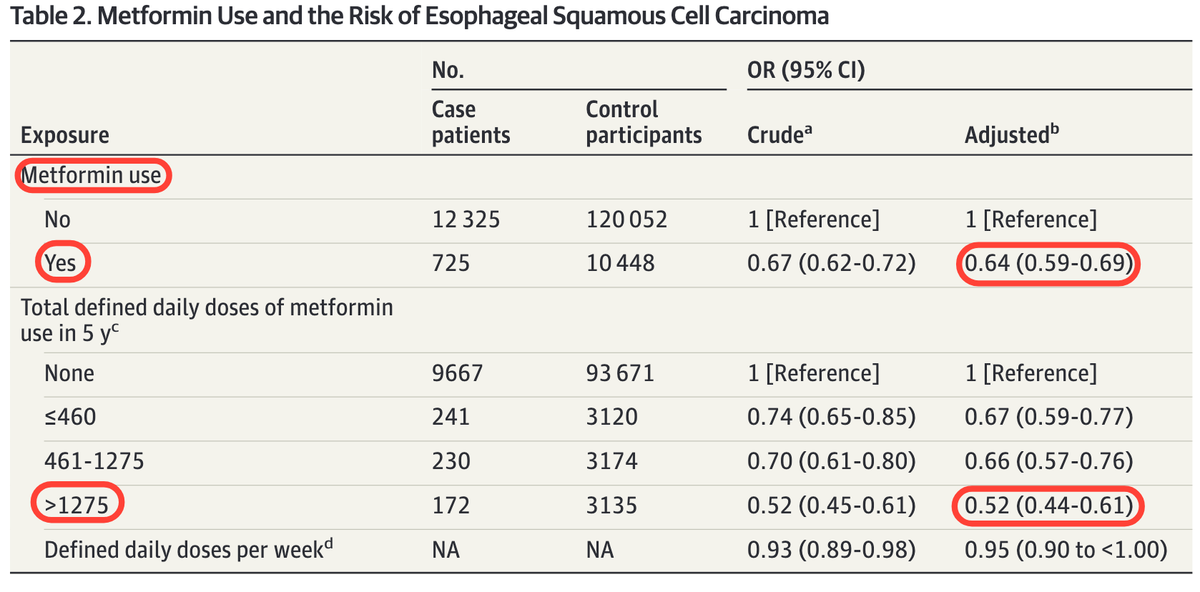
This population-based multinational case-control study across all five Nordic countries found that metformin use was associated with a substantially lower risk of esophageal squamous cell carcinoma (ESCC), with stronger protection seen at higher cumulative doses, supporting a dose-response relationship. Using high-quality national registry data from 13,050 ESCC cases and 130,500 matched controls, the investigators adjusted for major potential confounders such as smoking, alcohol overconsumption, NSAID/aspirin use, and statin use. The association remained consistent in subgroup and sensitivity analyses. The authors note that metformin may have chemopreventive potential through metabolic, anti-inflammatory, and AMPK/mTOR-related mechanisms. This study has numerous strengths, including a very large sample size, strong design and thorough analysis; it adds strong support to the hypothesis that metformin may be a useful preventative in persons at higher risk of ESCC. It also is consistent with other studies suggesting reduced risk of breast and colorectal cancers. In contrast, the published evidence is much weaker regarding an association with esophageal adenocarcinoma.
For those interested in delving deeper into potential local and systemic mechanisms, this linked figure (generated by claude.ai) provides additional information and references. Readers should exercise caution when interpreting AI-generated summaries of scientific literature, as these tools may misrepresent findings, omit critical nuance, introduce inaccuracies, or reflect training data biases that do not align with the current state of evidence.
Metformin Use and Development of Esophageal Squamous Cell Carcinoma
JAMA Netw Open. 2026;9(3):e262027. doi:10.1001/jamanetworkopen.2026.2027
Xie S, Santoni G, Birgisson H, et al.
Abstract
Importance: Esophageal squamous cell carcinoma (ESCC) carries a poor prognosis, stressing the need for preventive measures. A decreased risk of ESCC among metformin users has been suggested, but evidence is limited.
Objective: To assess whether metformin use, given its potential anticancer properties, is associated with risk of ESCC.
Design, setting, and participants: This population-based case-control study set between 1994 and 2023 looked at data from all 5 Nordic countries (ie, Denmark, Finland, Iceland, Norway, and Sweden). Participants were patients newly diagnosed with ESCC during the study period, and each was compared with 10 times as many control participants randomly selected from the general population (matched by age, sex, calendar year, and country).
Exposures: Use of metformin vs nonuse.
Main outcomes and measures: Conditional logistic regression provided odds ratios (OR) with 95% CIs for the association between metformin use and the development of ESCC. In addition to the matching, the ORs were adjusted for tobacco smoking, alcohol overconsumption, use of nonsteroidal anti-inflammatory drugs or aspirin, and use of statins. A dose-response analysis was conducted among participants with at least 5 years of observation time, based on the defined daily dose during the 5-year period.
Results: This study included 13 050 case patients with ESCC (8030 men [61.5%] and 5020 women [38.5%], diagnosed at a median age of 70 years [IQR, 62-77 years]), and 130 500 age- and sex-matched control participants. Metformin use was associated with a 36% lower odds of ESCC compared with nonuse (OR, 0.64; 95% CI, 0.59-0.69). The odds were especially lower in participants with a higher dosage of metformin (>1278 defined daily dose in 5 years: OR, 0.52; 95% CI, 0.44-0.61).
Conclusions and relevance: In this case-control study, metformin use was associated with substantially lower odds of ESCC. This finding should prompt investigations of metformin as a preventive option in high-risk individuals and as a potential future therapeutic agent for ESCC.