Review of prevention strategies for esophageal cancer
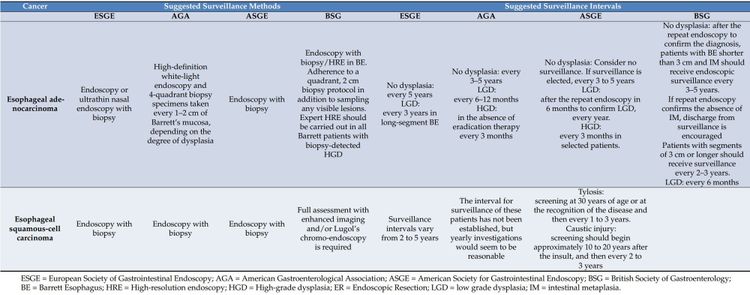
A nice review of prevention approaches to both esophageal squamous cell carcinoma and adenocarcinoma. It includes a summary of surveillance methods and intervals recommended by four GI societies
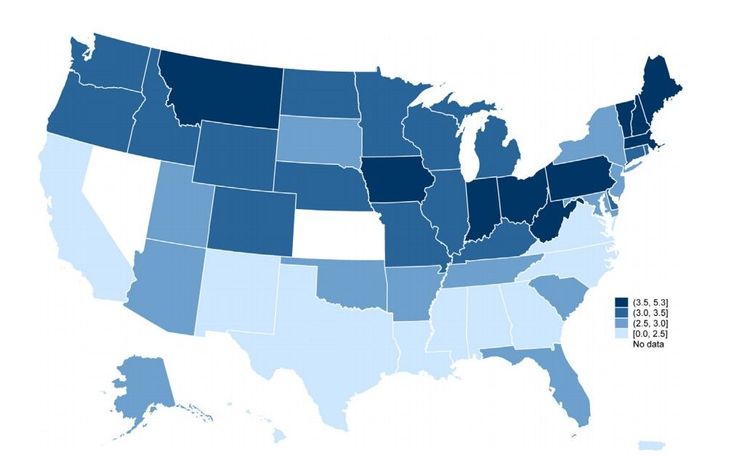
Esophageal cancer mortality trends in US
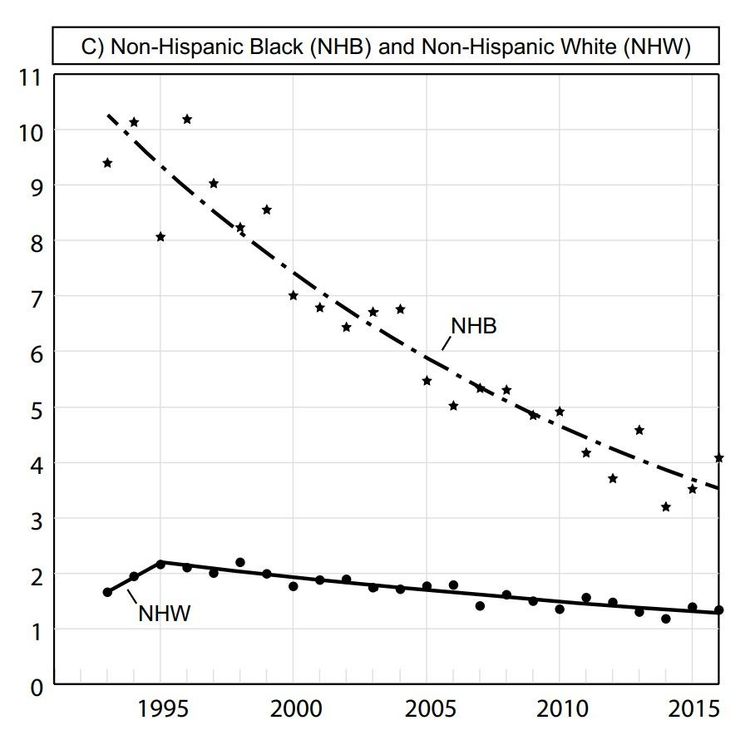
This report focuses on esophageal cancer mortality trends in the US from 1992-2016. The dramatic decrease in ESCC among black males over the past several decades is highlighted. The recent leveling off of mortality for esophageal adenocarcinoma in white males was observed to continue.
Visceral obesity and esophageal cancer
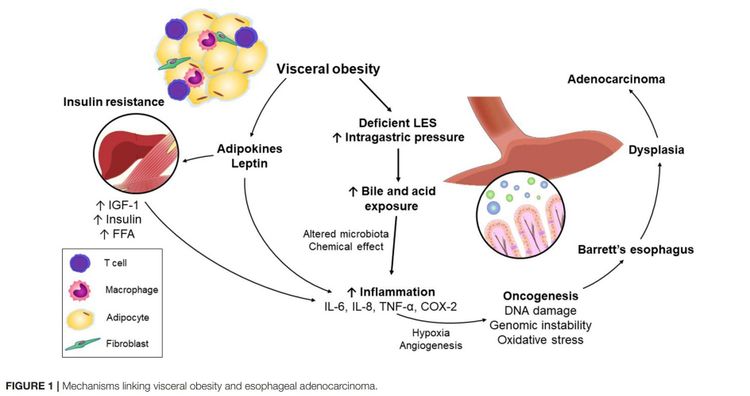
In this remarkably thorough review, Drs. Elliott and Reynolds summarize the evidence for and potential mechanisms underlying the association between visceral obesity and esophageal adenocarcinoma.
When to stop Barrett's surveillance?
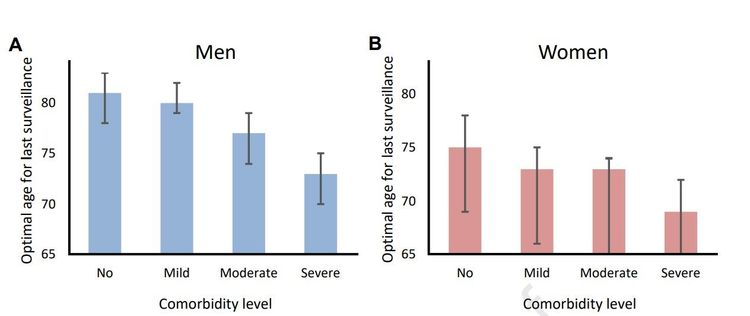
Gastroenterology societies recommend surveillance for non-dysplastic Barrett's but do not give guidance on when to stop. This modeling study suggests that the optimal age for last surveillance of NDBE patients depends on the sex and the comorbidity level of patients.
Review of Barrett's and esophageal adenocarcinoma
The authors review the incidence of BE and EAC and associated risk factors, evidence for improved outcomes among patients with a prior diagnosis of BE compared to those without, and the challenges of developing accurate prediction models in the context of high population prevalence of risk factors.
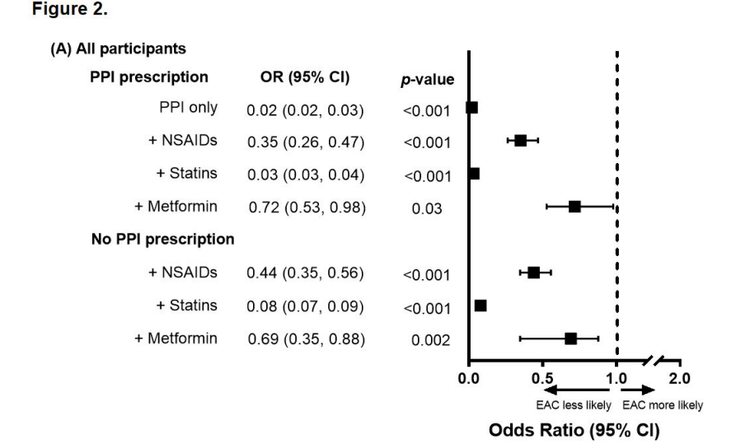
SEER study observes strong inverse association between EAC and use of PPI, statins and aspirin
A SEER-based observational study lends yet more evidence that aspirin, PPIs, statins and possibly metformin may reduce risk of EAC in persons with or without diagnosed Barrett's esophagus.
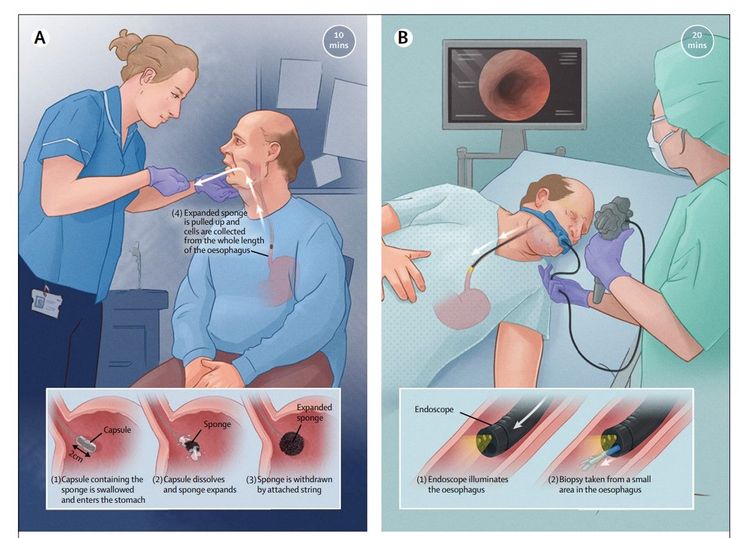
Utility of cytosponge demonstrated
This impressive randomized trial observed an approximately 10-fold increase in detection of Barrett's with use of the Cytosponge non-endoscopic test. Nine persons in the Cytosponge group were found to have treatable dysplasia or early stage cancer vs. none in the usual care group.
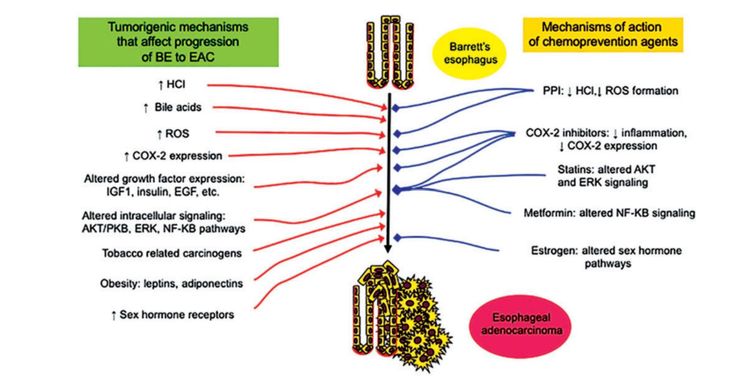
Review of chemoprevention status for esophageal adenocarcinoma
Dr. Bill Grady and colleagues review the status of chemopreventatives for progression of Barrett's to esophageal adenocarcinoma
Mathematical modeling suggests older ages for beginning screening
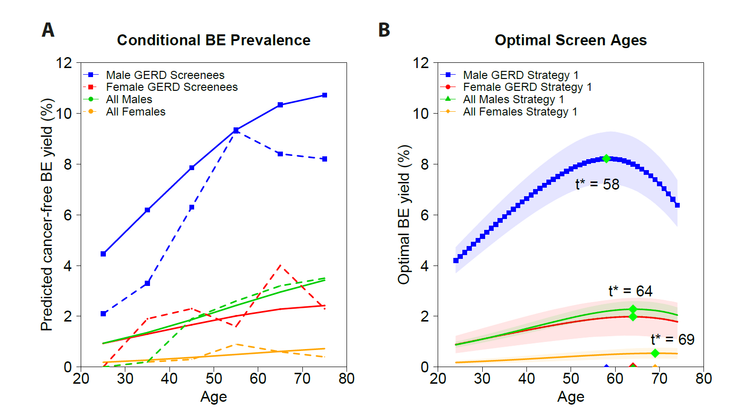
Kit Curtius and colleagues demonstrate how mathematical modeling of cancer evolution can be used to optimize age at initial screening for Barrett's and esophageal adenocarcinoma, suggesting an older start.
Early age of reflux symptoms predictive of Barrett's
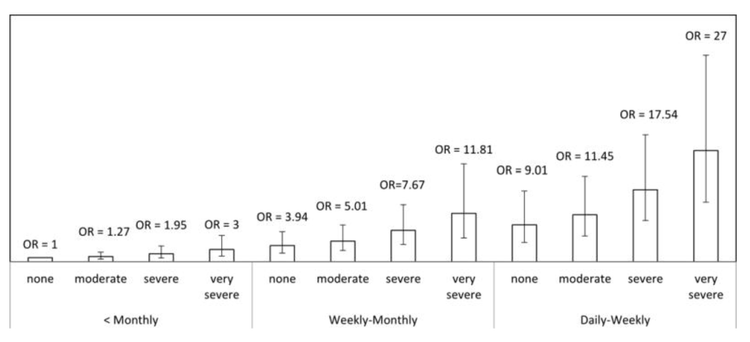
This study from Kaiser Permanente Northern California oberved that early onset of reflux symptoms approximately doubles risk of Barrett's esophagus, and that both severity and frequency of reflux symptoms are important in predicting risk.